

Get involved!
Help us expand the Workers Control Archive!
If you think you have some interesting text or content is missing:
Get in contact ›››
Recommended articles
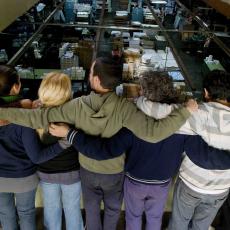 An essay that sketches out the most common microeconomic and organizational challenges that Argentina's recuperated workplaces face and maps out the “social innovations” being spearheaded by them.
|
 The economic crisis that began in 2008 has put workers’ control and workplace democracy back on the agenda in the countries of the northern hemisphere.
|
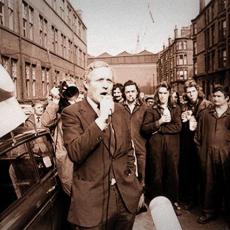 Britain in the 1970s was a period of crisis and polarisation. Workplace closure led to resistance by workers, which defined the relations between capital and labour for subsequent decades.
|
 Imagine that the algorithmic heart of the "Sharing Economy" could be cloned and brought back to life under a different model of ownership and work conditions, as a humane alternative to the market.
|
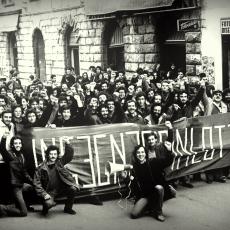 These theses written in the context of the 1970s 'autonomia operaia' in Italy intend to initiate a debate on workers’ control of the factories as a 'democratic and peaceful' road to socialism.
|