

Get involved!
Help us expand the Workers Control Archive!
If you think you have some interesting text or content is missing:
Get in contact ›››
Recommended articles
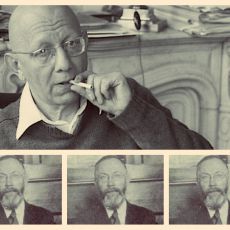 Castoriadis stresses his agreement with Pannekoek on the issue of the 'autonomy of the working class' and expresses his disagreement over the role of the revolutionary party.
|
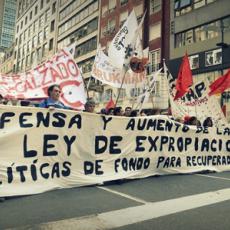 In Argentina, the government attempted to ‘institutionalise’ the occupied factories, de- politicising the radical aspects of workers’ actions in exchange for financial and technical assistance.
|
 Human alienation will disappear through the withering away of commodity production and social division of labour, through the disappearance of private ownership of the means of production.
|
 Workers’ self-management is associated with times of social transformation. The state may chose to either restrict self-management or facilitate it so the conflict is institutionalised and contained.
|
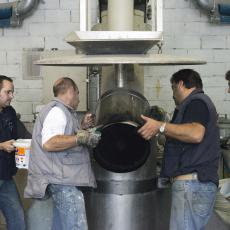 Against the imminent threat of liquidation, the workers of VIOME appeal for international solidarity.
|