
Get involved!
Help us expand the Workers Control Archive!
If you think you have some interesting text or content is missing:
Get in contact ›››
Recommended articles
 Dismantling the myth that the council communist tradition actually advocated a self-managed capitalist economy, rather than a truly communist one.
|
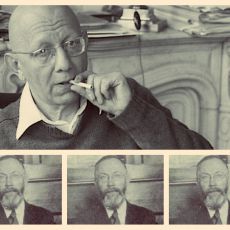 Castoriadis stresses his agreement with Pannekoek on the issue of the 'autonomy of the working class' and expresses his disagreement over the role of the revolutionary party.
|
 When a factory in Thessaloniki was abandoned by its owners in May 2011, the workers decided to occupy it and resume production under workers’ control.
|
 An examination of the worker cooperative as an example of a labour commons. The authors suggest that the radical potential of co-ops can be extended by connecting with other commons struggles.
|
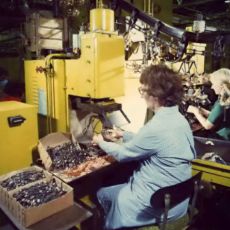 Thirty-eight years ago, a movement for ‘socially useful production’ pioneered practical approaches for more democratic technology development.
|